Tuesday, October 5, 2010

WHERE IS THE CHURCH?


It is an undeniable fact that the youth of today are being influenced by uncountable number of socio-emotional stimuli.  You look to your left, smoothly elevated and oiled breasts would wink at you, and to your right, indecency and irresponsible behaviors. It is a great challenge to live in this era where immorality and sexual infidelity are forcefully justified on our media and social environment.
The social state of Ghana is now under severe threat, especially the moral fabric. There are unbelievable amounts of prostitutes at almost every corner of the capital city, and night clubs have tremendously proliferated! The heartbreaking aspect of it is that these night clubs are devoid of strict surveillance, allowing the room for all sorts of ‘mmmm’. Of course, it is good to chill and have fun, but not to an extent that would weaken the stability of society.
On campus, lecturers have been bitterly complaining about the poor academic performance of students. And yep, recent academic statistics in Ghana buttress this assertion. Students are being swayed by all sorts of nonsense programmes, which in the end, have a negative toll on their academic life. Of late, our educational facilities have become fertile grounds for the cultivation of deadly-demons and retrogressive seeds. Illicit sexual activities have become like tooth-pick people use to clear the debris of marijuana and strong drinks!
On this note, I implore and admonish all religious communities in the country to stand up and fight to repair the damages. Things must change! Where Ghana is going is not the pre-destined road for us, we are gradually being driven in a comfortable bus to an uncomfortable environment. Things must change! According to Martin Luther King Jnr., Darkness cannot drive out darkness; only light can do that. Hate cannot drive out hate; only love can do that. I’m of the strong conviction that religious society of Ghana has the light and love to eradicate the shadow of doom yet to befall our country.
This is the time the church must be progressive in its ideas to capture the mentality and fantasies of the youth of today. There is a false stereotyped perception that the church is meant for only saints. How wrong! The life and purpose of Christ thwarts this perception. The church, personally speaking, is an aggregate of individuals united to a lifeline called faith, collectively working to make society a better and exciting place for humanity. Let’s open the doors for remorseful hearts to come in.
To cure the ‘sickness of our society’, it is imperative to put all religious differences aside and concertedly diagnose the prevailing ‘immoral and unethical’ diseases and offer better prescriptions.
Let’s make GOD proud of us!

Tuesday, September 28, 2010

ANIMAL EXPERIMENTATION, PROS AND CONS

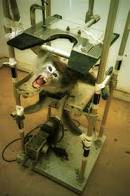
The young innocent chimpanzee leaned against the iron rods surrounding his cage, oblivious to what would transpire in the next fifteen minutes. Meanwhile, the experimental psychologist was busy at his desk, calculating formulas for his solution. He just can’t wait to come out with a scientific breakthrough.
Animal experimentation is the use of animals under controlled laboratory conditions for a variety of scientific and medical purposes. The use of animals in research has met a myriad of arguments in favour of it and counter arguments. Animal rights activists are cogently pressing for the abolishment of animals in experiments on the grounds that it is immoral, cruel, and unnecessary whereas some scientists are maintaining that animal experimentation is the key to sustaining the health of the human race. The detailed arguments of these factions are espoused below.
According to the Scientific Steering Committee for the European Commission, “experiments on live animals are powerful ways of better understanding the complex biological mechanisms of the human body”. Scientists, for that matter psychologists use animals to investigate the biological processes in humans and animals, figure out the causes of diseases, and to examine the effects of certain drugs, vaccines, etc. Through experimentation on animals, scientists have come out with uncountable remedies for diphtheria, tetanus, rabies, whooping cough, tuberculosis, poliomyelitis, measles, etc. for instance, in the 2nd century AD, a Roman Physician named Galen experimented on pigs and apes to demonstrate that veins carry blood, not air as had been believed. This development enlightened successive scientists on how to go about issues with respect to the veins.
About 7 percent of animals are used in researches conducted by Psychologists. (Christensen, 1994). This percentage covers animals like rats, rodents, monkeys, etc. it is estimated that about 18-22 million animals are used in the United States, out of which 90 percent are rats, mice, and birds. The fact is these animals are in abundance, easily accessible, and financially effective.
With reference to Darwin’s theory of evolution, which basically holds that most organisms can be traced to a common ancestry, and thus share certain similarities. Of course, humans and primates share similar physiological traits like nails, central nervous system, mammary glands, and hands and feet. And looking at the biological traits, it is been found that the Chimpanzee DNA matches 98.7 percent of human DNA. Thus, animals can be used as models for the betterment of humans.
Moreover, the law of parsimony states fundamentally, that to understand complex things, it is vital and necessary to grasp basic or simpler ones first. Therefore, to understand the complicated biological and social make-up of humans, it is necessary to use animals. Well, it is astonishing to note that people clamour for animal rights when they feed their stomachs with huge meats and wear fashionable leather belts!
Anyway, what are the arguments of the Animal Activist Groups?
To start with, they argumentatively express that animals and humans would be similar, but they basically not the same!  They further argue that animal experimentation is a gross infringement of the rights of animals and that it is tantamount to slavery.
 All species that can feel pain and suffering deserve equal consideration.  One English Philosopher, Jeremy Bentham argued, “Is not can they (animals) reason, nor can they talk, but can they suffer?” To Bentham, scientists, for that matter psychologist are violating the golden rule; don’t do unto others, what you don’t want them to do to you!
Records at the US government Accountability Office reveal that about 52 percent of new drugs marketed between 1976 and 1985 caused adverse effects that were not predicted by animal studies. In essence, animal experimentation can mislead researches or even contribute to illnesses or death by failing to predict the toxic effects of drugs. They made reference to the Thalidomide tragedy in the 60s and 70s. A sedative for breastfeeding and pregnant mothers that came with severe side effects such as severe deformities in children born, etc. another example is Clioquinol, which brought paralysis, blindness, and even death.
They offer alternatives like epidemiological s of studies, clinical intervention trials, study of human tissue and cell structures, and even study of patients with the HIV virus, and many more.
 To conclude, it is obvious that this debate would continue for many centuries. But I personally think that animal experimentation should continue, but should be regulated because a car without brakes is prone to fatal accident

Saturday, September 25, 2010

LA-GENERAL HOSPITAL - SIT UP!


One day I got an unfortunate opportunity to visit one of the hospitals in the Accra metropolis. Already, grapevine information has it that among the cherished achievements of this particular health institution are gross incompetence and neat unprofessionalism. As admirer of scientific principles, I initially doubted the substance of such rumours.
It is obvious that most of hospitals in Ghana are under-furnished with up-to-date facilities, under-staffed and inadequately resourced. One of such hospital is the La General hospital.
My first stop was the Out-patients department which was moderately sophisticated with a manageable number of rectangular seats, and adequate lighting. I was greeted by smell of disinfectants and moans of patients. It was a territory devoid of ecstasy, rather, saturated with pain, anxiety, tears, disappointments, and mixed feelings; a republic of hell.
But what struck me most was the manner in which the patients were attended to by the medical officers. The less I speak of it, the better. But the best adjective to describe the situation is ‘unspeakable’.
I got to know that their in-patient departments are choked coupled deteriorating facilities, which explains why some patients in serious medical conditions are positioned in the out-patients department.
It is time that the management of the hospital sits up and rectifies the appalling situations prevailing in the hospital. It is not enough to change the name from La Poly-clinic to La General Hospital; the paradigm shift must come with upgrading of facilities, better medical attention, and efficient discharge of services.

Thursday, September 23, 2010

NKRUMAH, GOOD OR BAD?


“The indivisibility of peace is staked upon the indivisibility of freedom”.  A couple of months ago, I penned down a number of worth-emulating attributes of Kwame Nkrumah and the need for the youth of Ghana, and even across Africa, to imbibe his vision and ideologies. But when taking coffee this morning, a series of questions occurred to me; is Nkrumah solely the champion of Ghana’s independence? Is his accomplishments overly exaggerated?
Growing up, I took utmost relish in listening to discussions focused on Nkrumah and other freedom fighters across the continent. It came to a time that I almost deified them because I saw them as ‘Homo sapiens’ with extraordinary abilities and wit. But now, my perspective has changed.
Nkrumah was a human being like us; with weaknesses and strengths. Thus, I wonder why people get emotionally agitated when the other side of Nkrumah is talked about. There is a saying that nobody is perfect.
The independence of Ghana is wholly credited to Nkrumah, though other people also engaged in the fight for freedom. This issue has been and is still debated in some quarters, especially when it comes to the coinage of the September 21 celebration “founder’s day”. Personally, Nkrumah deserves the credit for Ghana’s independence since he took a step further.
Nkrumah was moreover a key advocate of pan-africanism.  Indeed, he was instrumental in the formation of the current African Union (AU), formerly Organization of African Unity (OAU). During his reign, Ghana saw the execution of several infra-structural projects include the construction of the Komfo Anokye hospital, Accra-Tema motorway, Achimota College, the Akosombo dam, etc. But some people argue that he was able to embark on these projects because Ghana at then was financially healthy and the economy was splendid.
However, some people at completely not in sync with ‘show boy’. What are their arguments? Firstly, they argued that most of Nkrumah’s policies were parochially and dictatorially inclined. They made reference to the Preventive Detention Act. It was acts that threaten the freedom of critics of his government in the sense that people with opposing views are thrown into prisons without fair trial or trial at all.
Some even expressed that Nkrumah could have been ‘photocopy’ of Mugabe if he has not been overthrown since his policies were directed at establishing a one-party state and making himself a life president.
They further argued that during the reign of Nkrumah, the economy of Ghana got deteriorated. There was massive unemployment, the price of cocoa on the international market fell, food prices increased, etc.
Well, the solid fact is I was not around to experience the reign of Nkrumah. But having listened to both sides of the argument, I come to the conclusion that Nkrumah is no different from us; he is composed of flesh, blood, and soul highly tempted to sin. Period!

Saturday, September 18, 2010

ESSENCE OF ENVIRONMENTAL TECHNOLOGY


Our environment has been subjected to extreme exploitation to attain the aspirations and satisfy the needs of man. But in the long run, what is the essence to meeting the insatiable vanity of mankind and pay for a higher price in the future? A couple of week ago, Accra, the capital city of Ghana experienced acute shortage of Liquefied Petroleum Gas (LPG) due to the fact that this natural commodity (that is the LPG)meant  for domestic  consumption has met severe patronage from the automobile industry, especially private and public vehicles. Unfortunately, some of us forgot that the inability to access LPG for domestic consumption would mean resort to charcoal which would ultimately result in the destruction of our natural vegetation. Fortunately, there is an antidote to save our world, and that is environmental technology (technological environment).

Environmental technology, according to Wikipedia, is the application of environmental science to conserve the natural environment and resources, and to curb the negative impacts of human involvement. In other contexts, it is known as Green technology or clean technology. It evaluates the impact of human activities on the environment and seeks to develop appropriate technologies to achieve the twin objective of saving the environment and satisfying the needs of mankind. Simply put, to forge a symbiotic relationship between man and the environment.
What are the goals of technological environment? To start with, it seeks to sustain the environment which of course, is its prime objective. Already, the world is confronted with numerous natural disasters like hurricanes, earthquakes, flooding, etc due to the avoidable mistakes and negligence of man.
Moreover, it seeks to make efficient use of natural provisions without having a negative impact on the environment. A typical example is use of solar energy, which attracts energy from the sun to generate electricity. Already, some rural communities and some business establishment s in Ghana are already using solar energy.
In the past, technological advancement has come with huge prices, especially its negative impact on the natural environment, but if our businesses, governments, and we ourselves, would embrace environmental technology and respect the environment, humans and nature would live in harmony.


Thursday, September 16, 2010

WHAT HAPPENS TO A DREAM DEFERRED? - LANGSTON HUGHES

WHAT HAPPENS TO A DREAM DEFERRED?

DOES IT DRY UP,

LIKE THE RAISIN IN THE SUN?

OR FESTER LIKE A SORE -

AND THEN RUIN?

DOES IT STINK LIKE ROTTEN MEAT?

OR CRUST AND SUGAR OVER -

LIKE A SYRUPY SWEET?

MAY BE IT JUST SAGS

LIKE A HEAVY LOAD

OR DOES IT EXPLODE?

Wednesday, September 15, 2010

EDUCATION, OUR RIGHT

 I side with those who are of the opinion that education should take a holistic shape, empowering the mind, the soul and heart. There are thousands of children in Ghana who dream of becoming a doctor, a police officer, a pilot, a bank manager and so on. But, when you look at the trend of our educational sector, you would no choice but to painfully come to the conclusion that quality education has become the preserve of the affluent.
When you take a stroll through the streets of Accra Central, the scenes of neglected children is simply overwhelming; you either see children walking bare-chested on this cold weather or some delightfully filling their famished stomach on undernourished food. To survive, fairly grown ones have to resort to stressing means to make a living. In the Accra metropolis, there are 120 kindergarten schools, 359 Primary schools, and 428 Junior High Schools. In 2001, the Ghana Statistical Service estimated that approximately 27.2 percent of children aged 5-14 years in Ghana work. Worldwide, 100-150 million children live independently on the streets.
Neglected children are left with potentials for two things; positive and negative. The positive aspect would be quite beneficial to us but the negative is what would some years to come threaten the peace and stability of society. Edward Evereth, expressing his opinion on education, said ‘education is a better safeguard of liberty than a standing army’. This is absolutely true. When children are denied of their right to education, either formal or informal, what options are we providing them?